
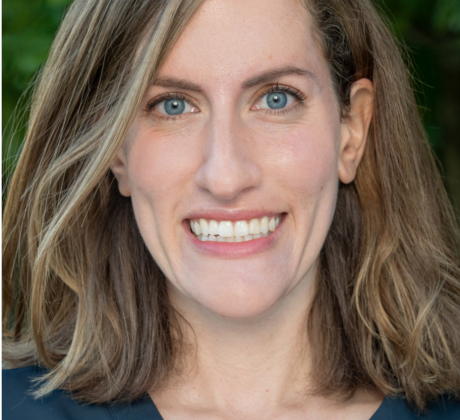
Stephanie Ostroff is a speech-language pathologist and journalist. She enjoys blending knowledge from both fields to shine a light on innovators and changemakers in health care.


Mosima Mabunda, MBcHB, MBA, MHCI '25 expands the scope of a program that incentivizes healthy behaviors
For some, the prospect of waking up well-rested is reason enough to clock in eight hours of sleep each night. But making healthy lifestyle choices isn’t intrinsically motivating to everyone. And the risk of repeatedly making the wrong choice can be detrimental.
Nearly 75% of deaths worldwide are associated with noncommunicable diseases (NCDs) like diabetes, cancer, cardiovascular disease, and lung disease, according to the World Health Organization. Diet, exercise, and sleep play a role in many of these conditions, and small shifts in behavior can pave the way to better health outcomes.
Dr. Mosima Mabunda, MHCI '25, centers these ideas in her work as Chief Clinical Officer at Discovery Vitality. Vitality is a South Africa–based platform that financially incentivizes people to make consistent behavior changes that boost wellness and longevity. For nearly 30 years, Vitality has rewarded members who improve their nutrition, exercise, and complete regular health screenings with points that can be redeemed on fitness devices, travel, and other incentives.
[The MHCI] allows me to do my role in a way that no one else could.
In September 2025, Vitality introduced Sleep Rewards to its program. Within a year, more than 200,000 members enrolled in the initiative. Mabunda, who spearheaded the clinical case for introducing sleep into the Vitality program, credits the Master of Health Care Innovation (MHCI) with giving her the framework and feedback to present this and other ideas with confidence.
“I now see myself not only as a doctor, but as a master of health care innovation,” she says. “Which allows me to do my role in a way that no one else could.”
Making the case for sleep as preventative care
In late 2023, a few months into her MHCI, Mabunda capitalized on an assignment in her Behavioral Economics and Decision Making course, taught by Kevin Volpp MD, PhD. She needed to design an intervention, plan how to share it with stakeholders, and test it. At the same time, at Vitality she had been tasked with identifying opportunities for improvement. Sleep tracking was on her radar. She knew the idea had potential, and the assignment gave her a chance to take it for a test drive.
“Being in the MHCI made my job easier,” says Mabunda. “I used every assignment to do my job. Unabashedly. We were encouraged to do so.”
Mabunda needed to develop a clinical pitch for sleep tracking that would appeal to executives at Vitality. She built a case around chronic conditions like diabetes, hypertension, and heart disease that are tied to insufficient sleep. These conditions drive insurance claims, burdening health care systems. Mabunda proposed that Vitality should introduce sleep as an additional pillar of the program, alongside exercise and nutrition, given the growing clinical evidence linking sleep to health, longevity, and chronic disease prevention.
I used every assignment to do my job. Unabashedly. We were encouraged to do so.
Scaling impact
“Sleep presented an opportunity to improve members’ health through another evidence-based behavior,” she suggested. “It could provide an additional access point into the program.”
Mabunda refined the pitch throughout her MHCI, with feedback from course instructors and classmates. She appreciated having a “real-time sounding board of people who are highly credible, highly experienced, and unattached” to the outcome who could trial her idea. The cohort also became an accountability partner.
“The program forced a weekly cadence,” Mabunda says. “My productivity was next level.”
Directing clinical strategy with confidence
When Mabunda eventually presented the clinical and strategic case for introducing sleep as an additional pillar of the Vitality program at Discovery’s Strategy Day, her Executive Committee colleagues and stakeholders across the group were supportive of the proposal. The idea was developed into Vitality Sleep Rewards. Members who achieve consistently high sleep scores can receive a fully funded Oura Ring, among other rewards.
“People who love incentives are motivated to try to do the right things,” she says. Vitality Sleep Rewards connects financial incentives to a weekly score. “And that weekly score means you need to get a good night’s sleep at least four nights per week.”
Mabunda says that a year after the program’s launch, Vitality sees encouraging behavior change trends among its users. The company plans to publish insights on these trends in the near future. She and her team will continue to examine the effects of Sleep Rewards alongside Vitality’s other healthy behavior pillars. Research has shown that Vitality members with the highest status levels (due to healthy behavior choices) at age 40 can expect to live up to 22 years longer when compared to the insured South African population. Mabunda expects adding sleep to the mix will only serve to increase the impact of the program as a whole.
One thing I’m particularly confident about now is the rigor of my work and the methodology I apply.
As she makes ongoing clinical recommendations at Vitality, Mabunda finds herself pulling from her MHCI. With a medical degree from the University of Cape Town, MBA from the University of Oxford, and experience as a consultant at McKinsey & Company all influencing the way she approaches her work, she says the MHCI “integrated everything into a toolkit” that she “needed for [her] role.” Learning about health-care specific theories and frameworks—especially around the use of AI and data science—has given her new material to draw from.
“Two years of pitching solutions and receiving feedback worked wonders for my confidence,” Mabunda says. “And one thing I’m particularly confident about now is the rigor of my work and the methodology I apply.”